Saturday, September 25, 2010

John & Sheelagh come to Italy! Monforte d'Alba.


after Cuneo, it was off to wine country. being told that we should make reservations to have tours around the vineyards i had written to a couple places over the summer but was overwhelmed by the amount of producers in the area - how was i supposed to pick the best places to bring my parents?! i also didn't want to create a time-strict schedule for us to have to follow. luckily, i got an email back following up to a previous tour-requesting email. so off we were to paolo monti's vineyard in monforte d'alba.
the piemontese countryside of the barolo region was beautiful with rows and rows of verdant green growing vines going vertically along and horizontally across the rolling hills. the chalky white soil appeared only to draw demarcating lines across the landscape. the buildings in the towns were cluttered together along the tops of the Langhe hills creating little picturesque communities while the red clay roofs of small and big estates appeared scattered amongst the fields of vineyards. the sky was endlessly blue without a cloud in sight. we slowly drove along the curvey road taking in the surrounding scenery and salivating at the juice-bursting purple grapes dangling at the bottom of the vines just had an arm's length away. there weren't any fences anywhere, so that didn't deter us from stopping to pick a couple grapes to taste....like a teaspoon of welch's jam bursting out of a thick protective skin. 

a couple of wrong turns, a shakey hazelnut-picking woman and a couple turn arounds in wrong drive ways later, we eventually showed up to paolo's unmarked winery. he stuck out his arm and introduced himself, "ciao, paolo monti." the owner himself! already impressed. we chatted a bit and then he brought us around to see the vineyard, tell us about the different vats and casks they use, brought us down to see where they are stored in a modern cellar and then on to the tasting. and we tasted each of the wines he produces: Barolo "Bussia" D.O.C.G, Barbera d'Alba D.O.C, Langhe Dossi Rossi D.O.C, Barolo D.O.C.G, Nebbiolo D.O.C, and the white L'Aura D.O.C. maybe a little tipsy-enduced...but I liked each one more than the next. they recently started importing directly to the US market via California and had mentioned a couple restaurants in NYC - including Lidia Bastinach's - so I'm sure my parents will be looking out for his name in future wine lists. the winery was more modern than other ones we had visited but paolo gave us his entire attention, describing his work, the place's history, and the wine making process to us while graciously pouring us his wines. it was so personalized, i think my parents were more impressed than any of the wine tours they went on in napa or sonoma. we would've stayed longer if we didn't have reservations for lunch.
wine tasting. is it noon yet? 
with paolo.
obligatory feet pic. dad's.

Friday, September 24, 2010

John & Sheelagh come to Italy! Liguria & Cuneo.

the next day it was off to the seacoast to show my parents all of our favourite summertime ligurian hot spots. banana tsunami included (even though it is empty and weirdo-less during day light hours). apparently, i learned, the boat docked in genova which i told them was christopher columbus' sailed straight here from disney world, was actually the boat used in some pirate movie - so the disney world related characteristics were not far off from hollywood. but they did see columbus' house. unfortunately our favourite pizza place was closed but mum did have her share of ligurian pesto pasta, because after all, that's what you eat when in liguria.
through the winding roads along the coastal mountain side, we reached vernazza - my favourite spot along the cinqueterre trail. it was a dark and stormy kinda day with huge waves crashing along the rocks and turbid clouds threatening a heavy downpour. after lunch underneath colourful umbrellas - the gaps clothes-pinned closed with draping cloth napkins to catch potential rain drops - with local white wine, troife alla pesto, polpo con patata and spaghetti arrabiata - dad went to take a nap and mum and I walked around the little town admiring the local products and artwork for sale and explored a small little church.

wedding destination #2
cute.
upon inquiring about a dinner reservation for later that night at a restaurant at the edge of town, above the harbour's rocks and overlooking the sea, we chatted up one of the workers who offered us two glasses of prosecco - despite the restaurant actually being closed mid-afternoon. i love this place.

we sat outside under a canopy overlooking the setting sun over the wild ocean waves and shivered in the september sea breeze despite the shelter.
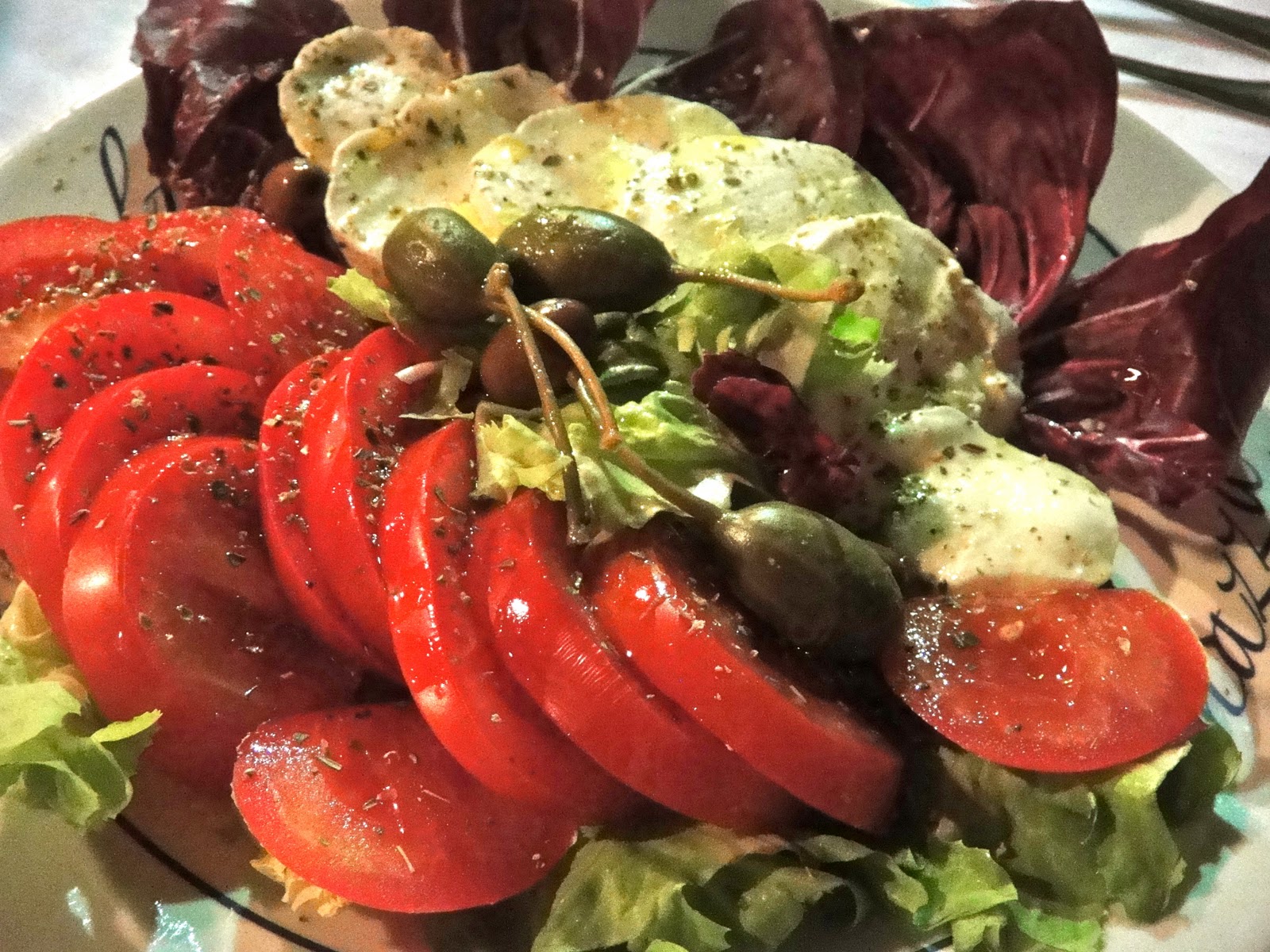
 mum was shocked by the size of the octopus and surprisingly decided she didn't hate mozzarella - just the bland rubber that is sold outside of italy. 
the next day, the sun was shining and my parents were able to see the seacoast in a completely different light. literally. we sat and had cappuccinos and genovese foccaccia along the harbour as the waves behaved a little bit calmer. we drove along the Italian Riviera, the winding roads up and down, in and around, the mountains covered in olive trees on one side overlooking the rocky cliffs and the little villages below as the shining blue sea sparkled in the sun's reflexion. i was able to share and point out my favourite architecture of the area - the intricate fake-architecture-detailed paintings on the buildings and the beautiful brightly-coloured houses with breath-taking sea views. 
we eventually made it to Cuneo. koon-ee-oh. koon-ay-oh. why would you go to Cuneo, we were asked. i am not sure. except to go out to dinner. one of the Alma kids, Salvatore, was working his stage at delle Antiche Contrade. he said if i was ever in the area to come to the restaurant and he would talk to his (michelin-rated) chef about something special for us. sold. done. i'm there. we'll be in the area.
that guy front left is so perfect for the shot.

Cuneo is an curious little city. it is centered around a huge piazza with hotels, restaurants and little stores under a columed arcade. the square hosts weekly markets which one could just imagine being packed and even picture the horses and carts in the olden days. we didn't see much of the city and the walk to the restaurant was pretty quiet - only a couple restaurants were filled with people despite the apparent height of the season. we were the first to arrive in the restaurant - push the bell to be granted access. the walls were painted a warming yellow and we were greeted with a vespa parked in the foyer just before seeing the windows looking into the bright white kitchen. there's something trusting about open kitchens. maybe it has to do with my 13 months at Cava. I spotted Salvatore in his chef outfit and the waiter who sat us went to bring him out. It was nice to see a familiar face and he seemed to be enjoying working there, although missing home in Sicily. We were first welcomed with a glass of prosecco and a basket of different freshly baked breads - we were kindly warned that they were just out of the oven and still hot.
brioche, focaccia, olive bread, focaccia with roasted tomato, beet bun
piedmontese steak like a tartare
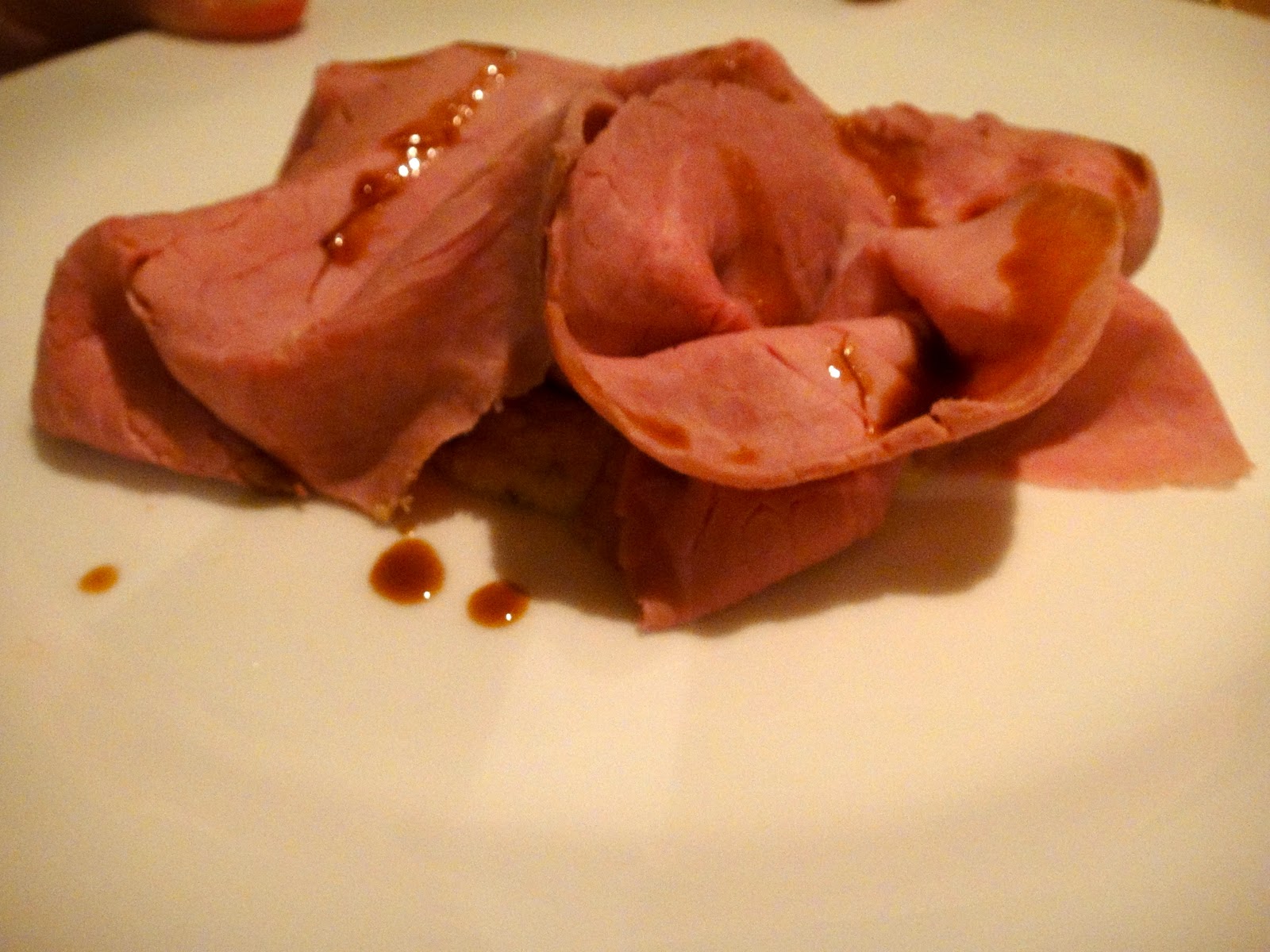
mum's pink veal slices in a white tuna sauce
chicken salad piemontese style - with white chicken from saluzzo - Buon Ricordo dish 2010
dad's spaghettone di Gragnano, oyster, ginger and basil seed
mum's ravioli stuffed with meat with its own juices
my linguine with lobster in a fresh tomatoes sauce
dad's saddle lamb fillet "as a Wellington" with peppers, tuna and capers
my veal fillet steak with potatoes and mushroom tart
the cheese cart. love.
my cheese selection. all regional except for one from sicily. i Love cheese.
complimentary dessert platter.

it was all really beautifully presented, the wait staff was very friendly, the dining room was elegant but comfortable - mum even got a little beauty-and-the-beast-doglike-stool for her purse - and the chef, Luigi Taglienti - Young Chef of the Year 2009 of L'Espresso - came out frequently to talk with each table and ask how everything was. a nice touch. at the end, i was given a tour of the kitchen as they cleaned up - learning about all the stations and being introduced to the young chefs learning under Taglienti. I even got a signed copy of the menu! (menu descriptions above copied directly). 
at the end of the menu is a list of the specific suppliers for the flour, parmesan, poultry, butcher, fish, cheeses and vegetables noting that "the choice of ingredients is crucial to grant dishes their exceptionality" and the wines honour the great 'terroir' of Piedmont. local. sustainable. you know i love it.
Many thanks later, I was told I could come work for them on a stage and to please come back to Cuneo! lovely. maybe, maybe i will...

John & Sheelagh come to Italy! Emilia Romagna.

so after 6 weeks of summer holidays and 2 days of school learning all about parmigiano reggiano and one morning learning about food economics, came the much anticipated arrival of my parents. i couldn't wait to show them around my life in Colorno - in three minutes flat - "well, this is all of it," - to reintroduce mum to team zinzani after the initial awkwardness back in March when none of us knew each other, to see Dad again as there was a slight possibility work would hold him up, and for the itinerary I planned over the summer as tour guide extraordinaire to finally come to fruition. unfortunately i had forgotten all of my italian over the summer holidays but hopefully they wouldn't mind.
first stop: a quick tour around the University and gardens, an introduction to friends, a hello to the tutors, and then lunch in piazza garibaldi. obligatory: the cured meat plate. pasta. and wine. unfortunately, our favourite local friend and waiter, san daniele, had moved to parma and there was a new guy. how was i supposed to impress my parents know with knowing the locals and speaking the language? so instead of one cured meat plate enough for 3 - we got 3 cured meat plates. i looked at it in horror, having had enough cured meat over the last seven months, but then, of course, ate it anyways. my wonderful italian skills and lack of communication with the new guy also lead us to only having one pasta dish instead of the two regional dishes I wanted my parents to try, but that turned out in our favour as it was way too much food anyways. typical. a perfect introduction for john and sheelagh to life in italy!

a walk around beautiful parma filled the sunny afternoon and then we rushed back in the bigger than an-IQ rental car to Colorno to meet some of the students at where else, but the pub! it was so nice for everyone to come and meet my parents although i'm sure when drinks are involved it doesn't take much convincing. we sat outside drinking bubbly prosecco's and bright orange spritz's while mauro spoiled us with large platters of more cured meat. a typical wednesday afternoon in Colorno. bliss.

then it was off to Antica Corte Pallavicina to show my parents where we all fell in love on our first stage. it's a beautiful old castle estate and farm in the countryside - found only by taking the windy yet extremely flat scenic route of emilia romagna - complete with its own large garden of vegetables and a courtyard fluttered with peacocks. we had a lovely apartment-style room that I could have easily moved into with views of the cows munching on muddy grass outside and the roosters that would wake us up in the morning. 

wedding destination #1

dressed up and ready for dinner, we started with some aged parmesan cheese ("how old is this parmigiano reggiano? 32 months. and where is it from? from our mountain cows' milk.") along with some extremely soft melt in your mouth homemade sausage, freshly made bread, and fizzy house lambrusco. we then had a tour of Massimo Spigaroli's famous culatello-curing cellar where I'm not sure if Arina and I impressed or embarrassed the tour guide with our extensive knowledge of cured meats when she wasn't able to answer the other guests' questions. future cured meat tour-guide job? possibly. my parents gasped, breathed in the intoxicating meaty smell, and laughed in amazement at all the round cured meat wrapped in bladder, tied in twine, and individually labeled, which hung from the ceiling and along the walls but by now, this was a pretty standard sight for us.

the dampness (from the proximity of the po river) of the cellar is crucial for the culatello curing process and the Spigaroli's know exactly when to open and close the windows - unlike many climate-controlled prosciutto di parma facilities. it keeps the meat soft and ensures it's unique characteristic. culatello is a boneless chunk of meat from the largest muscle from the rear of the pig. it is a PDO product made only in 8 villages within a restricted area as anywhere else doesn't have the knowledge or the specific terroir-ic conditions to make it. it is cured only in the winter months, from october to march, for a minimum of 12 months in which the winter humidity and the po river-low valley fog ensure a long and slow drying process. 
breathing in the damp cellar's lovely yet unforgettable aromas of cured meats and the nearby po river humid winds blowing through the windows.
"no, you can't make prosciutto di parma and culatello because culatello comes from this upper part but with all the leftover meat you can make finocco and salami's......"
"and over here is prince charles' culatello, and here is armani's and marchesi over here"

the tour ended with seeing the parmigiano reggiano storage and where they used to pack ice outside. dinner then followed as we entered into the dimly-lit restaurant built with two large glass walls on either side - one overlooking the vine-draped courtyard and the other into the dark countryside which was occasionally being lit up by a fantastic lightening storm in the distance. the restaurant uses local and home grown fruits, vegetables and animals. Arina and I chose the two different eight-course tasting menus, recommended by friends, while my parents chose two dishes each, overwhelmed by the amount of food they had already eaten that day.

?
Il Podio dei Culatelli di suino bianco 18 mesi e 27
del presidio Slow Food, di "Nera Parmigiana" di 37 mesi e giardiniera di Corte
Gli gnocchi di rana con ortaggi verdi e fiori di zucchine
I tortelli di erbette alla parmigiana
I ravioli di lumache fondenti in sfoglia di granoturco
con foglie di rapa rossa e fiori 
I soffici ai tre parmigiani in minestra tiepida di verdure


Il filetto di rombo in ristretto di gamberi rossi,
tortino di fagiolini e acciughette
La faraona ricoperta di culatello cotta nella creta del Po
accompagnata dai nostri ortaggi
Il petto d'anatra pezzata nera in crosta di aromatiche e le sue verdure 
La selezione dei Parmigiani: dalle cantine: i parmigiani di pianura , collina, montagna, 


vacche rosse, vacche brune, vacche bianche


lesson learned, years later repeated from a bad reaction in paris, i am still allergic to frog legs. 


Wednesday, September 22, 2010

A Lesson on Parmigiano Reggiano: Day 2

then, naturally, after seeing where the milk comes from, it is obligatory to go see how the milk turns into cheese. so early in the morning, we departed for the cheesemaker "Caseificio San Salvatore" in Colorno to see the cheese production process. 

part skim evening milk and whole morning milk mixed together before 6 am___the yellowy colour is whey and is the starter mixture, high in acidity, it is full of natural bacterias___the quantity and quality of the milk recieved is never the same so the producer must determind the whey amount___the cauldrons have double walls (the tempertaure the same so that milk is uniform - around 36 degrees) that go deep into the ground and are just high enough for the cheesemaker to reach in to stir___animal rennet is added to the liquid. rennet is the stomach lining and they take it when cows are slaughtered, then it is washed, dried and chopped into a powder and preserved with sea salt___2 drops of rennet per 100l milk which is usually about 20-24 drops___the cheesemaker knows the exact time to add the rennet (8:05am). he is like a chef and has to understand the milk itself and the entire process - he even knows which farms' milk and type of cow milks that can be mixed together___the rennet causes the milk to coagulate and changes the structure of the liquid into a jelly-like one - 12 minutes later curds appear___copper cauldrons are the tradition and it is the best heat conducter after silver so that the curd doesn't stick to the wall as it acts as a repellent through chemical reactions___the quality of cheese could change within seconds but the cheesemakers know by touch___there are different tools used for the separation of the curds___the rising temps allow the faster mixing because the molecur links are stronger___the colours change from yellow (the whey) to white (the cheese/protein) but a certain amount of whey must remain in the curd otherwise it will turn to stone during the aging process___when the final temp (54-55 degrees) is reached, the whey is on top and the curds have sunk to the bottom of the cauldron - then wait one hour until it is cool. the whey will weigh down on the curds___the cauldrons are washed just with water as solvents are not allowed___the cheese is wrapped in cloth and put into moulds - the wrap is changed 3x's a day and the cheese is fipped so that the liquid is drained___it then goes into the salted brine - up to 30 days depending on the size and turned upside down every day. the fat comes out the salt goes in, causing a natural rind to form___the natural osmosis takes about 9 months___by 9:48 the work is done and it is time to just clean up

8:14:44am - they time it to the second.


can also tell when its ready by the touch. the curds form on top then settle to the bottom.
while we wait for the curds to settle to the bottom of the vats and the liquids to cool, we go see the cheese wheels in the salt baths.

watch the magic. 
then they drain the liquid from the cheese and the whey is vacuumed out.
go into buckets to be marked.

next, we visited the Consozio Agrario Parma, which is basically a huge storage facility where the large wheels of parmigiano reggiano sit in long corridors to age properly under the correct temperature and humidity conditions.
there is a machine goes down each aisle that turns each wheel of cheese as well as dusts it___when cheese is wet to the touch it is called "sweating"___they have to also check the quality of the cheeses.  mezzano, the second grade parmigiano reggiano cannot last a second summer if the problem is with the milk, but if the problem came from thet structure, it can continue to be aged___the quality is perceived by tapping the wheel to determine if the problem is with the milk or can be determined by the structure because outside forms/damages will be seen____mountain milk is considered to be better quality so more expensive___wheels lose about 5% weight every year___prices fluctuate___bad cheese smell dusty.
of course throughout the course of the day we had lots of cheese to eat. 
(and this is just what i took pictures of...)
milky squeaky curd.
raw parmigiano reggiano
parmigiano reggiano in the aging facility. 
a bunch of small hor d'oeuvres for lunch.
and pasta of course. 
and again at the packaging facility. maybe it's jamie oliver's. maybe it's organic. maybe it's shipped to a chain store in england. maybe all the cheese is exactly the same. 

the last visit in our parmigiano reggiano stage was to the packaging center in Parma called Gennari. 
they collect the cheese for packaging___jamie oliver newest client___some parm reg is fixed weight or cut and otehrs are packaged ___pay for the label or the plastic tray____bio packaging is more expensive than the cheese___blocks are more expensive than triangle cuts b/c there is more waste because cut out the "heart" of the cheese wheel
the cheese wheel gets cut into equal layers.
the heart is cut out.
the cheese layer is sliced.
perfectly cut slices.
falls apart into the bucket, ready for packaging.
into the trays to be labeled and sealed.